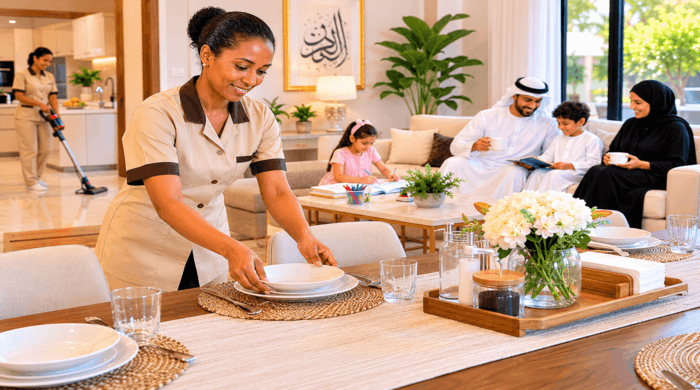

Hiring a live-in maid is one of the most important decisions a family can make. Finding the right candidate is only the first step. Long-term success depends on what happens after the recruitment process is complete.
Many families focus on recruitment, interviews, and onboarding. However, the real challenge often begins once the maid becomes part of the household routine. Building a stable and long-term working relationship requires clear communication, mutual understanding, and realistic expectations from both sides.
A successful long-term arrangement benefits everyone. Families enjoy greater stability and peace of mind. Domestic workers also perform better when expectations are clear and support is available.
In this guide, we explore practical strategies that help families in Qatar build a strong long-term relationship with their live-in maids and create a positive household environment that supports lasting success.
🏠 Why Long-Term Stability Matters
Many households underestimate the value of stability.
When a family experiences frequent changes in domestic staff, the effects often extend beyond household operations.
Children may need to adjust repeatedly to new caregivers. Daily routines may become disrupted. Parents may find themselves investing time and energy into repeated training and orientation processes.
By contrast, a stable long-term working relationship creates familiarity, consistency, and efficiency.
Over time, a maid who understands the household’s preferences, routines, and expectations often becomes more confident and productive, helping the home run more smoothly.
Long-term stability is not simply about avoiding replacement—it is about creating an environment where both the family and the domestic worker can succeed together.
🎯 Start with Realistic Expectations
One of the most common reasons working relationships become strained is a mismatch between expectations and reality.
🔹 Avoid Expecting Immediate Perfection
Every household has unique routines, preferences, and standards.
Even highly experienced domestic workers need time to learn:
- Household rules
- Family preferences
- Daily schedules
- Communication styles
Expecting immediate perfection often creates unnecessary frustration.
🔹 Focus on Progress Rather Than Perfection
Families that prioritize gradual improvement often achieve better long-term results.
Allowing room for learning and adaptation helps create a healthier and more productive environment.
💡 Practical Tip
Instead of evaluating performance based on the first few weeks, focus on whether consistent progress is being made over time.
🗣️ Build Strong Communication from the Beginning
Communication plays a central role in long-term success.
Many household challenges can be traced back to misunderstandings rather than poor performance.
🔹 Give Clear Instructions
Vague instructions often lead to inconsistent results.
Providing specific guidance helps ensure expectations are understood correctly.
🔹 Encourage Questions
A maid who feels comfortable asking questions is more likely to perform tasks accurately and confidently.
🔹 Address Issues Early
Small misunderstandings can become larger problems if ignored.
Addressing concerns respectfully and promptly helps maintain a positive working relationship.
⚠️ Common Mistake
Some families only communicate when something goes wrong.
Regular communication should include positive feedback as well as corrections.
📋 Establish Consistent Household Systems
Successful households often rely on systems rather than constant supervision.
🔹 Create Clear Daily Routines
Structured routines help everyone understand what needs to be done and when.
Examples may include:
- Cleaning schedules
- Laundry routines
- Meal preparation responsibilities
- Childcare-related tasks
🔹 Reduce Uncertainty
Consistency reduces confusion and allows the maid to perform tasks more independently.
🔹 Improve Efficiency Over Time
As routines become familiar, daily operations often become smoother and more efficient.
A clear household system supports both productivity and stability.
🤝 Develop Trust Gradually
Trust is one of the strongest foundations of long-term success.
However, trust is rarely built overnight.
🔹 Allow Relationships to Evolve Naturally
Trust develops through repeated positive interactions and consistent performance.
🔹 Recognize Reliability
Acknowledging responsible behavior encourages accountability and confidence.
🔹 Maintain Professional Boundaries
Trust and professionalism should work together.
Clear boundaries help prevent misunderstandings while supporting a respectful relationship.
💡 Remember
Strong trust does not eliminate structure—it strengthens it.
📈 Support Growth and Improvement
Long-term success often depends on continuous development.
🔹 Encourage Learning
Many domestic workers improve significantly when given opportunities to learn household preferences and new responsibilities.
🔹 Provide Constructive Feedback
Helpful feedback focuses on improvement rather than criticism.
🔹 Recognize Progress
Acknowledging positive development can increase motivation and confidence.
When workers feel supported, they are often more engaged and committed to their roles.
👶 Maintain Stability for Children and Family Members
For households with children, stability becomes even more valuable.
🔹 Consistency Creates Comfort
Children often respond positively to familiar routines and trusted caregivers.
🔹 Reduce Repeated Adjustments
Frequent staff changes may require children to repeatedly adapt to new people and routines.
🔹 Strengthen Household Structure
Long-term continuity often contributes to a more predictable and comfortable home environment.
This stability benefits both children and parents.
⚖️ Balance Expectations and Responsibilities
A sustainable working relationship depends on balance.
🔹 Avoid Constantly Expanding Responsibilities
Adding new tasks continuously without clear discussion can create frustration.
🔹 Review Expectations Periodically
Household needs may change over time.
Occasional discussions help ensure expectations remain realistic and achievable.
🔹 Prioritize Clarity
Clear responsibilities often lead to better performance and fewer misunderstandings.
A balanced workload contributes significantly to long-term stability.
🌍 Respect Cultural and Personal Differences
Live-in domestic workers often come from different cultural backgrounds.
Understanding these differences can strengthen communication and cooperation.
🔹 Encourage Mutual Respect
Respect creates a positive atmosphere that supports long-term success.
🔹 Avoid Assumptions
Every individual adapts differently.
Taking time to understand communication styles and personal perspectives can improve the working relationship.
🔹 Create an Inclusive Environment
Workers who feel respected and valued are often more comfortable, confident, and productive.
⚠️ Warning Signs That Can Affect Long-Term Stability
Recognizing potential issues early helps families address challenges before they become major problems.
🚩 Communication Breakdowns
Frequent misunderstandings may indicate the need for clearer communication.
🚩 Lack of Routine
Inconsistent expectations often create confusion.
🚩 Constant Criticism
An environment focused solely on mistakes can reduce motivation.
🚩 Unclear Responsibilities
When duties are not clearly defined, frustration often develops on both sides.
Addressing these issues early supports a healthier long-term relationship.
📊 Measuring Success Beyond Daily Tasks
Many families evaluate success based only on whether tasks are completed.
However, long-term success involves additional factors.
Consider questions such as:
- Is communication improving?
- Is the maid becoming more independent?
- Are routines becoming more efficient?
- Is the household operating more smoothly?
These indicators often provide a more complete picture of long-term progress.
✅ Building Stability Is an Ongoing Process
A successful long-term working relationship is not created in a single week or month.
It develops through consistent communication, realistic expectations, mutual respect, and ongoing support.
Families that invest in these areas often experience greater stability, stronger household routines, and better overall outcomes.
Rather than viewing stability as a result, it is more useful to view it as a process—one that continues to strengthen over time.
❓ Frequently Asked Questions
- How long does it take to build a stable working relationship with a maid?
Every situation is different, but strong working relationships usually develop gradually through consistent communication and clear expectations.
- Why is long-term stability important for families?
It helps create consistent routines, reduces disruption, and allows the household to operate more efficiently.
- Can communication improve long-term performance?
Yes. Clear and respectful communication is one of the most important factors in maintaining stability.
- Should responsibilities remain the same forever?
Not necessarily. Responsibilities may evolve, but changes should be discussed clearly and managed fairly.
- What is the biggest mistake families make?
Expecting immediate perfection rather than allowing time for adaptation and gradual improvement.
📞 Looking to Build a Stable Household Environment in Qatar?
Long-term success with a live-in maid starts with the right foundation and continues through clear communication, structured routines, and realistic expectations.
At Rozana Manpower, we help families in Qatar find suitable domestic workers and provide guidance that supports stable, productive, and long-lasting household arrangements.
Contact our team today to explore available candidates and build a stronger foundation for your home.