
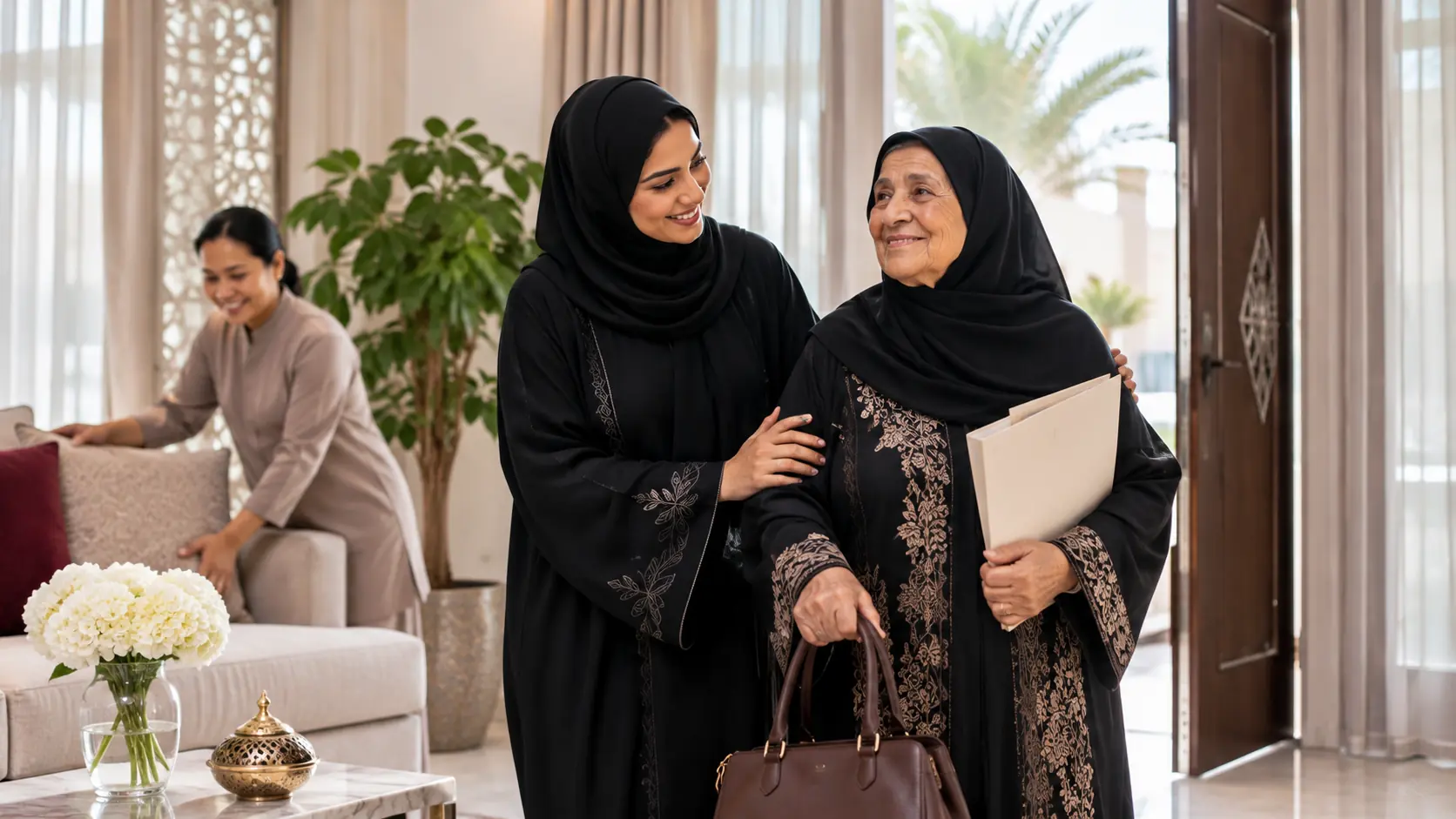
When an older family member returns home from hospital, everyday routines may need extra attention. Families can make the transition easier by preparing familiar spaces, organizing household tasks, and sharing responsibilities.
A domestic helper can assist with meals, housekeeping, companionship, and other non-medical activities. However, medical care must remain with qualified healthcare professionals.
For families in Qatar, the goal is to create a comfortable home environment without overwhelming the older person or their relatives. A simple household plan can make the first days more organized and less stressful.
🏡 What Changes at Home After Hospital Discharge?
Coming home is often a welcome moment for an older person. Familiar rooms, family conversations, and daily habits can bring comfort.
However, returning home may also change how the household operates. Relatives might need to rearrange work schedules, prepare meals, or spend more time helping with daily activities.
The First Days May Feel Different
An older family member may prefer more rest or a quieter environment. Some usual activities might take longer than before.
The family may also need time to understand the new household routine.
For example, an older mother returning to her family home in Doha might prefer meals in her room for a few days. Her children may need to organize household tasks around her preferences.
These changes do not always require complex arrangements. Small adjustments can make everyday life more comfortable.
Why Household Coordination Matters
Without a clear plan, family members may unknowingly repeat tasks or overlook simple needs.
One person might prepare lunch while another has already ordered food. Several relatives may visit together when their loved one prefers a quiet afternoon.
A shared plan helps everyone understand what needs attention.
The aim is not to create a strict schedule. It is to make home life easier while respecting the older person's preferences.
🩺 Separate Medical Care from Household Support
One of the first steps is deciding who should handle each responsibility.
A domestic helper can provide practical assistance. She cannot replace a licensed nurse or healthcare professional.
Families arranging elderly caregivers in Qatar should understand these limits before assigning tasks.
Who Handles Each Responsibility?
| Responsibility | Who Should Handle It? |
|---|---|
| Preparing regular meals and keeping rooms tidy | Domestic helper, within agreed duties |
| Organizing family visits and household arrangements | Family members |
| Making decisions about medication or treatment | Qualified healthcare professionals |
| Arranging medical appointments and transport | Family members or an authorized representative |
| Carrying out prescribed nursing procedures | Licensed healthcare professionals |
| Providing companionship and suitable daily assistance | Domestic helper, within her experience and abilities |
Keep Medical Decisions with Professionals
Hospital discharge instructions may include medicines, appointments, or special care requirements.
A family member should understand these instructions and coordinate any necessary professional support.
A domestic helper should not diagnose symptoms, change medication, treat wounds, or perform medical procedures.
If an older person needs skilled nursing, the family should arrange that service separately.
This clear division protects everyone involved and prevents unrealistic expectations.
🛋️ Prepare Familiar Rooms for Everyday Comfort
The home does not need a complete redesign before an older relative returns.
Instead, focus on simple changes that make everyday activities more convenient.
Begin with the spaces the person uses most often.
Start with the Bedroom
A familiar bedroom can help an older person settle into normal life.
Consider these simple arrangements:
-
Keep a phone within easy reach.
-
Place everyday belongings in familiar locations.
-
Ensure lamps and light switches are accessible.
-
Remove unnecessary clutter from walking areas.
-
Keep frequently used clothes and personal items organized.
Avoid making major changes without discussing them first. Familiar surroundings may matter more than perfect organization.
If special equipment or mobility arrangements are needed, follow professional guidance.

Make Shared Spaces Easy to Use
The living room often becomes an important gathering place.
Arrange comfortable seating and leave clear walking paths. Keep commonly used items within reach.
In larger Qatar family homes, relatives may spend time together in a shared sitting room or majlis.
Consider whether the older person prefers joining family gatherings or spending quieter periods elsewhere.
Organize Household Tasks Around Comfort
Regular cleaning, laundry, and room organization should continue without unnecessary disruption.
Families who need wider everyday housemaid support can arrange these duties separately from any elderly assistance.
A tidy home is useful, but comfort should guide the routine.
For example, avoid vacuuming a nearby room while an older family member is resting.
Practical tip: Walk through the home before discharge. Identify simple household changes that could make daily activities easier.
🕒 Create a Flexible Daily Routine for the Family
A predictable household routine can reduce confusion during the first days at home.
However, the schedule should remain flexible. Family preferences and professional instructions must guide any necessary changes.
Organize Meals, Rest, and Family Time
Start by identifying the usual activities that need coordination.
These may include breakfast, housekeeping, rest periods, and family visits.
A simple daily plan might look like this:
| Time of Day | Household Arrangement |
|---|---|
| Morning | Prepare breakfast and organize frequently used areas |
| Late morning | Complete quieter household tasks |
| Afternoon | Arrange lunch and allow time for rest |
| Early evening | Coordinate family visits or shared activities |
| Night | Prepare personal belongings and organize the home for the next day |
This is only an example of household organization. It is not a medical or recovery schedule.
Share Responsibilities Between Family Members
One family member might arrange transport for appointments. Another might manage shopping or communicate with relatives.
The domestic helper can focus on agreed household duties.
For families needing full-time live-in household support, it is important to define responsibilities and respect normal working hours and rest arrangements.
Live-in assistance should not be treated as continuous medical supervision or unrestricted 24-hour work.
Review the Routine as Needs Change
The first arrangement may not remain suitable.
Perhaps the older person wants breakfast later. Family visits might become easier to organize after a few days.
A short family discussion can identify what is working.
Make small changes instead of replacing the entire routine.
The best household schedule supports everyday comfort without becoming another source of pressure.
📝 Give the Domestic Helper Clear Household Instructions
Good coordination depends on simple instructions and clear responsibilities.
This becomes especially important when several family members share the same home.
A helper may otherwise receive different instructions from different people.
Choose One Main Family Contact
Assign one adult family member to coordinate household instructions.
This person can explain daily priorities, answer questions, and communicate changes.
Other relatives can still help. However, one main contact reduces conflicting requests.
For example, a daughter may coordinate meals and personal preferences while her brother manages transport and appointments.
The helper should know whom to contact when she needs clarification.
Prepare a Simple Household Handover Note
A written note can be more useful than several long conversations.
It should contain practical household information, not confidential medical records.
| Information | Example |
|---|---|
| Main family contact | Daughter's name and phone number |
| Meal preferences | Preferred breakfast and usual meal times |
| Rest preferences | Quiet time during the afternoon |
| Household duties | Meal preparation, laundry, and room organization |
| Personal preferences | Preferred language and visiting arrangements |
| Questions or concerns | Contact the designated family member |
Keep the note short and easy to update.
Medical instructions and prescribed treatment plans should remain under the responsibility of the family and qualified professionals.
Explain Tasks Without Overloading the Helper
Start with the most important household responsibilities.
Explain each task using clear words and practical examples.
If the helper is new to the home, allow reasonable time to understand the routine.
This approach supports clear and respectful communication while keeping daily responsibilities realistic.
A helper who understands her duties can work with greater confidence.
Remember: A household handover should explain everyday arrangements, not turn a domestic helper into a medical caregiver.
🌷 Respect Your Older Relative's Dignity and Preferences
Returning home should not mean losing control over everyday decisions.
Older adults may value their privacy, familiar habits, and personal independence.
Family support should respect these preferences whenever possible.
Include Your Loved One in Daily Decisions
Ask simple questions instead of making every choice on their behalf.
For example:
-
Would you prefer breakfast in your room or with the family?
-
Is this a convenient time for visitors?
-
Which belongings would you like nearby?
-
Would you prefer some quiet time this afternoon?
These questions help the older person remain involved in household decisions.
Avoid Unnecessary Changes
A well-meaning family member might rearrange furniture or replace familiar household items.
However, the older person may prefer the previous arrangement.
Discuss changes before making them whenever possible.
The same principle applies to household assistance.
Ask how the older person feels about receiving help with particular activities.
Keep Privacy and Family Relationships in Balance
Personal privacy remains important regardless of age.
A helper should knock before entering private rooms and respect agreed boundaries.
The family should also maintain normal relationships with their loved one.
Domestic assistance can reduce household pressure, but it should not replace family conversations or personal attention.
A comfortable home respects the person's choices, not just the household schedule.

📞 Know When to Contact a Healthcare Professional
Household support and medical care should work alongside each other, with clear responsibilities.
Families should follow the hospital's discharge instructions and seek professional guidance when needed.
Keep Discharge Information Accessible to the Family
Before leaving the hospital, the responsible family member should understand the instructions provided.
These may cover follow-up appointments, prescribed medicines, or any special professional care arrangements.
Keep important information in a secure place that authorized family members can access.
If anything is unclear, contact the hospital or the relevant healthcare professional.
Do not rely on a domestic helper to interpret medical instructions.
Create a Clear Family Communication Plan
Make sure the helper knows whom to contact if she notices a concern.
She can inform the designated family member about an unusual situation without attempting to diagnose its cause.
The family should then follow the hospital's guidance or contact appropriate healthcare services.
For urgent situations, the responsible person should seek emergency assistance without unnecessary delay.
Review Support When Circumstances Change
Household arrangements may need adjustment over time.
An older person might require less assistance with everyday tasks. In other cases, new needs may arise.
Families should review the domestic helper's responsibilities accordingly.
If those needs involve medical treatment, complex mobility assistance, or professional nursing, consult qualified healthcare providers.
A domestic helper should never be expected to perform tasks beyond her abilities or agreed role.
🤝 How Rozana Helps Families Plan Non-Medical Home Support
Choosing domestic assistance for an older relative requires a clear understanding of household needs.
This is particularly important when the family is planning support around hospital discharge.
Rozana Manpower is a licensed maid agency in Qatar that helps families review domestic worker candidates and discuss suitable recruitment arrangements.
Our role is to help families explore non-medical assistance, not provide nursing or clinical services.
Start with Your Household's Actual Needs
Before contacting an agency, identify the everyday tasks that require assistance.
These might include organizing meals, keeping frequently used rooms tidy, or providing companionship.
Explain any preferences involving language, communication, or previous experience with older adults.
Be specific about the duties you expect.
Review Individual Experience
Not every domestic worker has the same background.
Some candidates may have experience assisting older adults. Others may have worked mainly in general housekeeping.
Families can review available candidate profiles and discuss relevant experience with Rozana's team.
Any specific elderly assistance skills should be confirmed before making a decision.
Plan for Everyday Support, Not Medical Treatment
Explain which activities belong to the helper and which remain with family members.
If professional medical assistance is required, arrange it through an appropriate healthcare provider.
This distinction helps families set realistic expectations from the beginning.
Rozana can discuss candidate suitability, household responsibilities, and recruitment arrangements based on the family's requirements.
The aim is to identify practical support that fits the home and the older person's preferences.
❓ Frequently Asked Questions
Can a Domestic Helper Replace a Nurse After Hospital Discharge?
No. A domestic helper provides non-medical assistance within her experience and agreed responsibilities.
Licensed healthcare professionals must handle nursing procedures, medical treatment, and clinical decisions.
Families requiring both types of assistance should arrange them separately.
What Should Families Prepare Before an Older Relative Returns Home?
Start with frequently used rooms, personal belongings, household supplies, and family contact details.
Discuss meal preferences and daily arrangements with the older person.
Follow the hospital's instructions for any special health or mobility requirements.
Who Should Manage Prescribed Medication at Home?
A responsible family member should coordinate medication arrangements according to professional instructions.
Any task requiring nursing skills or medical authorization belongs to qualified healthcare professionals.
Domestic helpers should not independently manage doses, make medication decisions, or carry out medical procedures.
What If the Older Person Needs More Support Later?
Review which needs involve ordinary household activities and which require professional assistance.
Discuss changes in domestic duties with the helper and recruitment agency when appropriate.
For new medical concerns or care requirements, consult the relevant healthcare provider.
💚 Discuss Your Family's Home Support Needs
A comfortable return home begins with clear plans and realistic responsibilities.
Rozana Manpower helps families in Qatar explore domestic workers who may suit their non-medical household needs.
Tell us about your loved one's daily routine, preferred assistance, and household expectations.
Contact our team to discuss available candidates and suitable recruitment options.