
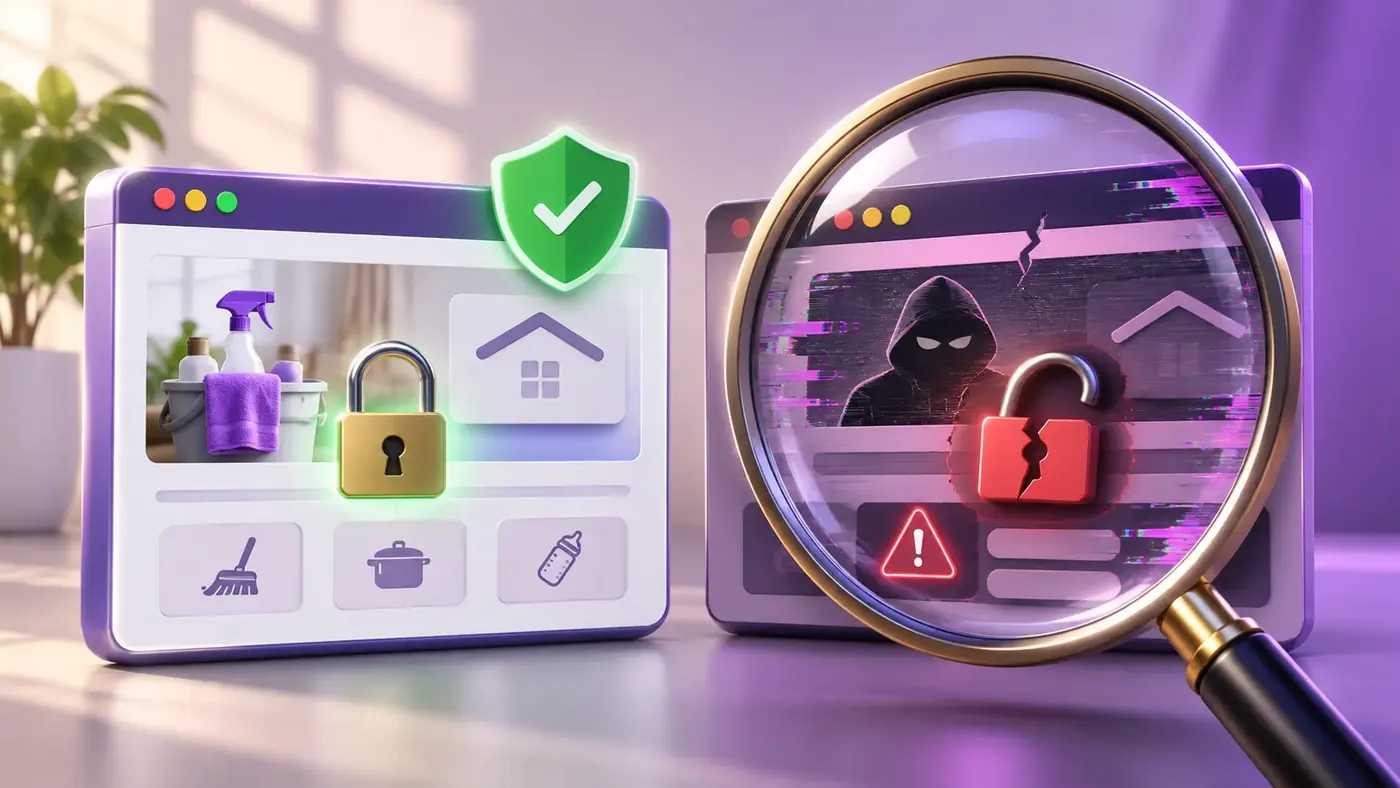
Before using a domestic worker recruitment website in Qatar, check its exact address, confirm the agency's identity, and verify its contact details. Never send payments or personal documents through links you cannot trust.
These simple checks matter more than a professional-looking advertisement.
On November 4, 2026, Qatar's Ministry of Labour warned the public about websites impersonating Moawen, the official domestic worker recruitment platform.
The warning highlights a wider concern. Fake websites and misleading advertisements can look convincing, even when they have no connection to a genuine recruitment agency.
This guide explains how to recognize warning signs, check recruitment websites, and protect your information before making a decision.
🌐 What Do Fake Recruitment Websites Look Like?
Fake recruitment websites are designed to make visitors believe they are dealing with a genuine business or official service.
Some copy familiar logos, colours, and website layouts. Others use attractive advertisements to direct families toward unfamiliar websites or messaging accounts.
A convincing appearance does not prove that a website is genuine.
Websites That Copy Genuine Brands
An imitation website may look almost identical to the original.
It might display a familiar company name, photographs of domestic workers, or an official-looking logo.
However, the website address may contain a small difference.
For example, someone could replace one letter in a company name or add an unexpected word to its domain.
These changes can be difficult to notice when browsing quickly.
Always check the complete website address rather than relying on the logo alone.
Fake Social Media Accounts and Advertisements
Social media is a common place to discover domestic recruitment services.
Genuine agencies may advertise through Instagram, Facebook, and other platforms.
However, a sponsored advertisement does not automatically prove that the advertiser is legitimate.
Be cautious when an unfamiliar account:
-
Uses a company name without clear contact information.
-
Directs you to an unrelated website.
-
Requests immediate payment through private messages.
-
Promises guaranteed recruitment without explaining the process.
-
Refuses to provide verifiable business details.
These signs do not always prove fraud. They indicate that further checks are necessary.
Warning Signs Worth Checking
| Warning Sign | What You Should Do |
|---|---|
| Website address looks slightly different | Compare it with the verified official domain |
| Contact number appears only in an advertisement | Find the agency's contact details independently |
| Offer seems unusually cheap | Request a clear explanation of the service and costs |
| Website has no clear company information | Verify the agency through independent sources |
| Payment is requested urgently | Stop and confirm the request before proceeding |
Remember: An attractive website is not evidence of a licensed or trustworthy recruitment business.
🔎 Check the Full Domain Before Clicking or Paying
A website address is one of the most useful details to examine.
You do not need advanced technical knowledge to check it.
A few simple habits can help you avoid visiting an imitation website.
Read the Website Address Carefully
The domain is the main address that identifies a website.
For example, an official government service may use a domain ending in gov.qa.
Check for unusual spelling, extra words, or unexpected extensions.
A suspicious address might include the name of a genuine organization while actually belonging to another website.
Pay particular attention to the part immediately before the first single slash following the domain.
Do not assume that a website is official simply because its address contains a government agency's name.
Does HTTPS Mean a Website Is Genuine?
No. HTTPS means that information sent between your browser and the website is encrypted in transit.
It does not prove that the business operating the website is legitimate.
Fraudulent websites can also use HTTPS certificates.
Therefore, a padlock icon or secure connection should never be your only reason for trusting a recruitment website.
You still need to verify the domain, business identity, and payment instructions.
Be Careful with Shortened Links and QR Codes
Short links can hide the destination until you open them.
QR codes can also lead to websites that are difficult to inspect beforehand.
This does not mean that all shortened links or QR codes are unsafe.
However, unexpected links deserve additional attention.
When possible, open your browser and enter the verified website address yourself.
Five Checks Before You Continue
-
Read the complete domain carefully.
-
Compare it with an independently verified official address.
-
Check that the page belongs to the expected organization.
-
Avoid entering information through unfamiliar redirects.
-
Confirm unexpected requests before sharing personal details.
These checks take little time and can prevent unnecessary risks.

🏢 Confirm the Recruitment Agency Outside the Advertisement
A website may contain attractive photographs, positive reviews, and detailed service descriptions.
However, these features alone cannot establish whether the agency is licensed.
Families should verify the business independently before beginning recruitment.
Check Whether the Agency Is Licensed
Qatar's Ministry of Labour advises families to deal with licensed recruitment offices.
In September 2026, the ministry also reminded the public to check recruitment advertisements carefully and verify the agencies behind them.
The ministry has published information about registered recruitment offices to support these checks.
When verifying an agency, use current information from the relevant government authority.
Do not rely only on a licensing claim displayed inside an advertisement.
Compare the Company's Business Information
A genuine recruitment agency should make its identity reasonably clear.
Look for:
-
The registered business name.
-
An office address.
-
A working telephone number.
-
An official website or business email.
-
Clear information about the recruitment services offered.
You can compare the advertisement with the agency's company background and details.
If important information differs, contact the business through an independently verified channel.
A missing detail does not automatically prove fraud. However, unexplained differences deserve attention.
Contact the Agency Through an Independent Channel
Suppose an advertisement provides a WhatsApp number for a recruitment offer.
Instead of relying only on that number, locate the agency's contact information independently.
You might use its known official website or verified business listing.
Then ask whether the advertisement and offer genuinely belong to the agency.
This approach is especially useful when an unfamiliar account claims to represent a well-known recruitment office.
The key is independent verification. Do not use the same suspicious advertisement as your only source of proof.
👩💻 Look Beyond the Photos in Candidate Advertisements
A photograph may help families recognize a candidate, but it provides limited information about her experience.
Recruitment advertisements should not replace proper candidate verification.
Families need enough information to understand who is being presented and what responsibilities the worker may be able to perform.
Look for Clear Candidate Information
Useful candidate details may include:
-
Relevant household experience.
-
Languages spoken.
-
Practical skills.
-
Previous responsibilities.
-
Availability and applicable recruitment arrangements.
Families may compare current candidate profiles to understand how experience and skills differ between applicants.
However, information displayed online should still be confirmed with the recruitment agency.
Do not make assumptions based on appearance, nationality, or photographs alone.
Be Cautious About Unrealistic Promises
Some advertisements may promise immediate recruitment or guaranteed results without explaining important conditions.
Other offers may advertise unusually low prices without identifying which services are included.
A low price does not necessarily mean an advertisement is fraudulent.
Likewise, a fast recruitment process is not automatically suspicious.
The warning sign is a lack of clear information combined with pressure to proceed.
Ask practical questions before making a commitment.
Verify Candidate Availability
An advertisement may remain online after a candidate becomes unavailable.
This can happen even when the original advertisement was genuine.
Always confirm the candidate's current availability before making plans or payments.
You should also ask whether the information provided reflects her actual experience and abilities.
A reputable recruitment process allows families to clarify relevant details before deciding.
The goal is to make an informed choice, not simply respond to the most attractive advertisement.
💳 Treat Every Payment Request as a Separate Check
Even after verifying a recruitment website, families should examine payment requests carefully.
Scammers sometimes impersonate genuine businesses through messages, email accounts, or payment links.
This means a legitimate agency's name can appear in a fraudulent payment request.
Confirm Who Will Receive the Money
Before paying, check the identity of the recipient.
Ask whether the payment details were issued through the agency's confirmed communication channel.
If someone suddenly provides a different account or asks for payment to an unfamiliar individual, verify the change independently.
Do not assume that a familiar logo or company name makes payment instructions genuine.
Request Clear Written Payment Information
Families should understand what they are paying for.
Ask for a written explanation that identifies:
-
The recruitment service being arranged.
-
The applicable fees.
-
What the quoted amount includes.
-
Relevant payment conditions.
-
The receipt or payment confirmation process.
Where available, compare the information with the agency's published recruitment terms.
This helps you identify unexpected differences before completing a transaction.
Never Share Login Codes or Passwords
A genuine payment process should not require you to disclose your personal banking password or confidential verification codes to a recruiter.
Be especially cautious when someone requests:
-
One-time passwords (OTPs).
-
Banking login details.
-
Card security codes through chat.
-
Passwords for government services.
-
Access to your phone or personal accounts.
These details should remain private.
| Situation | Safer Response |
|---|---|
| Unexpected payment link | Verify it through the agency's confirmed contact channel |
| Different account holder | Ask for clarification before transferring money |
| Request for an OTP | Never share the code |
| Pressure to pay immediately | Pause and review the details |
| Unclear recruitment fees | Request a written breakdown |
Online payments are not unsafe by nature. The important step is confirming the recipient and payment purpose.

📱 What Should You Do After Receiving a Suspicious Message?
Receiving a suspicious recruitment message does not mean you have been defrauded.
What matters is how you respond.
Follow these five steps before taking further action.
1. Stop the Conversation Temporarily
Do not open additional links or follow new payment instructions.
Avoid making decisions while someone is pressuring you.
A legitimate offer should allow reasonable time to verify important details.
2. Protect Your Personal Information
Do not send further identification documents, banking details, or login codes.
If the sender already has basic information, avoid providing additional details until you understand the situation.
Do not assume that a sender is genuine simply because they know your name.
3. Contact the Organization Independently
Locate the agency's verified phone number or official website.
Ask whether the message, advertisement, or payment request originated from that business.
Do not rely only on contact details supplied in the suspicious message.
4. Keep Relevant Records
Save useful information such as:
-
Screenshots of the advertisement.
-
The sender's contact details.
-
The website address.
-
Relevant messages.
-
Payment receipts, if applicable.
These records may help you explain the situation to the appropriate organization or authority.
Avoid circulating personal documents or sensitive information publicly.
5. Take Action If Information Was Exposed
If you shared banking details or made a suspicious payment, contact your bank promptly.
If you revealed a password, change it using the service's official website or application.
Review your account security and enable additional verification where available.
If identification documents were exposed, seek guidance from the relevant official authority.
The earlier you respond, the better your opportunity to protect your information.
🌍 What Does the Moawen Warning Mean for Families?
Moawen is Qatar's official digital platform for domestic worker recruitment, introduced under the Ministry of Labour.
Its launch created a new government-supported digital channel for the sector.
However, an official platform can also become a target for impersonation.
The Ministry's November 2026 Warning
On November 4, 2026, Qatar's Ministry of Labour warned the public about unauthorized websites impersonating Moawen.
The warning urged users to remain alert to online fraud attempts and access the platform through its official address.
The ministry identified the official domain as:
moawen.mol.gov.qa
This is the domain families should recognize when checking references to the platform.
Why the Website Address Matters
A fraudulent website might use the word Moawen in its name or advertisement.
It could also display government-style colours or symbols.
Neither feature proves an official connection.
The correct domain is more reliable than visual similarities.
When reviewing a website, check that its actual address matches the official domain.
Do not mistake an additional word, unfamiliar extension, or lookalike address for the genuine platform.
Official Platforms and Recruitment Agencies Have Different Roles
Government platforms and licensed recruitment agencies should not be treated as identical services.
Official digital channels may support designated recruitment procedures.
Agencies provide recruitment-related services within their authorized scope.
Families should verify each channel according to its own role.
The Moawen warning does not mean that all private recruitment websites are unsafe.
Instead, it reinforces a practical rule: verify the website and the organization separately before sharing information.
✅ Your One-Minute Safety Checklist Before Recruitment
Before responding to a domestic worker recruitment advertisement, review these seven points.
They can help you decide whether more verification is needed.
Seven Questions to Ask Yourself
-
Website: Have I checked the full domain?
-
Agency: Can I independently verify the business identity and licensing?
-
Contact: Do the contact details match a trusted source?
-
Advertisement: Are the offer and candidate details clear?
-
Payment: Do I understand the fees and recipient information?
-
Privacy: Have I avoided sharing passwords or verification codes?
-
Confirmation: Have I checked unexpected requests through an independent channel?
If you cannot answer an important question, pause before proceeding.
What Happens After Verification?
Once you have confirmed the agency's identity, you can focus on the normal recruitment process.
This may involve reviewing candidates, discussing household requirements, and understanding the expected arrangements.
The usual recruitment coordination should take place through verified channels.
You can also review the usual recruitment journey to understand how candidate selection and hiring arrangements fit together.
These steps serve different purposes.
Website verification helps establish whom you are dealing with. Candidate evaluation helps you decide whether a worker suits your household.
Both are important, but neither replaces the other.
Make Verification a Normal Habit
You do not need to investigate every advertisement for hours.
Start with the domain, business identity, contact information, and payment details.
These checks provide a useful first layer of protection.
If something remains unclear, ask questions before proceeding.
A careful approach allows families to use online recruitment services with greater confidence.
❓ Frequently Asked Questions
Does HTTPS Mean a Recruitment Website Is Trustworthy?
No. HTTPS encrypts information exchanged between your browser and a website.
It does not confirm that the business is licensed or that an advertisement is genuine.
You should still verify the website address, agency identity, and payment instructions.
Can Domestic Worker Advertisements on Social Media Be Genuine?
Yes. Licensed recruitment agencies may use social media to advertise their services and candidates.
However, sponsored advertisements and follower counts do not prove legitimacy.
Check the agency independently before sending documents, discussing payments, or making a recruitment commitment.
How Can I Check the Official Moawen Website Address?
Qatar's Ministry of Labour identified moawen.mol.gov.qa as the official Moawen domain in its November 2026 warning.
Check the full address carefully and avoid websites that merely use the platform's name or logo.
If you are uncertain, confirm the address through the Ministry of Labour's official communications.
What If I Have Already Shared Personal Details with a Suspicious Website?
Stop providing additional information and keep relevant records.
If you shared passwords, change them through the genuine service. If banking information or payments are involved, contact your bank promptly.
Seek guidance from the appropriate official authority if sensitive identification information was exposed.
💜 Verify Before You Begin Your Recruitment Journey
Online recruitment can make finding domestic assistance more convenient. However, choosing the right website is an important first step.
Families should be able to identify the business, check its information, and understand its recruitment arrangements before committing.
Rozana Manpower identifies itself as a licensed maid agency in Qatar and publishes its office location, contact information, and recruitment services on its official website.
Families can review this information and discuss available candidates through the company's established communication channels.
For questions about recruitment arrangements or to verify a message claiming to represent the office, contact our team through the official website.
A safer recruitment journey begins with clear information and careful verification.